What is EDI?
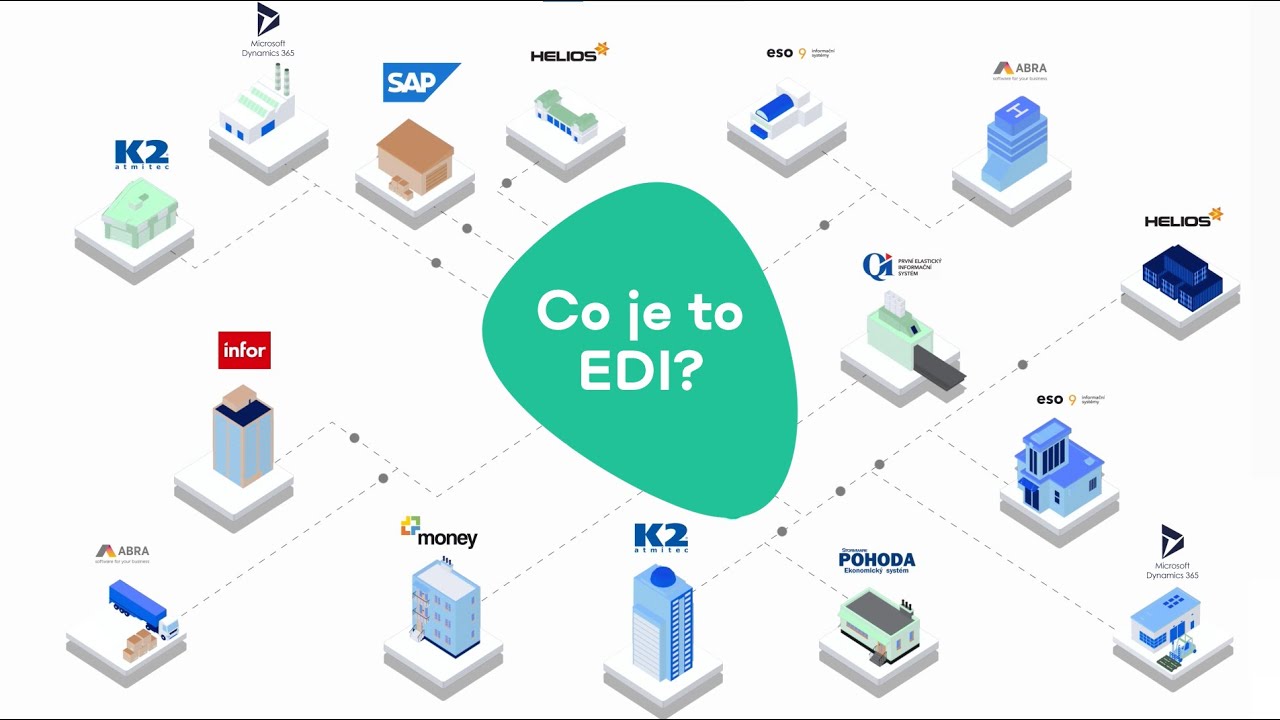
EDI – or Electronic Data Interchange – is a modern method of communication between business partners that involves the exchange of commercial, logistical, and other documents (e.g., orders, delivery notes, invoices, etc.) electronically in structured formats.
Electronic Data Interchange
What is it good for?
No PDFs sent by email. Enterprise resource planning (ERP) systems can load these formats automatically without the need for manual retyping. The exchange of these messages usually takes place via secure communication channels with a high level of feedback.
The goal of EDI is therefore to gradually replace paper documents with electronic ones, thereby reducing the costs associated with their exchange while simultaneously increasing the efficiency and quality of processes. EDI documents have the same legal weight as "paper" documents. EDI can be used to connect various information systems both outside and within a company.
Many national and industry-specific standards have been defined for EDI communication to date, such as ODETTE in the automotive industry or SWIFT in banking. However, these standards are mutually incompatible, which led to the creation of a single international standard for electronic data transmission – UN/EDIFACT.
Issues regarding the security of data transmitted via EDI are addressed both through software directly within EDI systems and by using cryptographic methods (encryption, keys, digital signatures) for communication between individual systems, and finally, by implementing digital signatures and encryption directly into messages in EDIFACT format.
You can find more information on the EDIZone information portal dedicated to electronic communication: www.edizone.cz.

What is the essence and principle of EDI?
Let's use a practical example of EDI usage: an order created in the buyer's information system is automatically transferred to the supplier's information system.
The order example perfectly captures the core concept of EDI. The buyer creates an order in their information system. The document exists in electronic form. Why not allow the supplier to work directly with this electronic document? If you print the order from your system, send it in an envelope, fax it, or email it in a readable format, the other party has no choice but to manually re-enter it into their system. However, when transferring an electronic document, receiving the order can be automated.
We have implemented EDI for many small and large companies

.avif)











Call us
+420 553 610 316Write to us
obchod.orion@grit.czThank you for filling out the form
We will be in touch soon.
ORiON EDI Product Terms
You can download the ORiON EDI product terms and conditions document here.