ORiON EDI - EDI communication for managing the flow of orders, deliveries, and invoices across your business network
ORiON EDI unifies data communication between buyers, suppliers, and logistics partners. Orders, confirmations, delivery notes, invoices, catalogs, and inventory data flow in a structured format directly between systems.
This allows the company to maintain continuity between business cases, inventory movements, and financial documents. No more retyping data, fragmented communication, or custom procedures for every partner.

Seamless integration with


...and over 150 other systems.
5 min → 10 s
processing one document
within 1 year
return on investment with high document volume
up to 95%
less manual checking
Benefits
What is EDI and what are the benefits of electronic data interchange?
EDI converts business communication between companies into structured data. Orders, confirmations, shipping notices, invoices, inventory information, and payment details are not sent manually, but are transferred directly between the systems of the customer, supplier, and, where applicable, the logistics partner.
This allows a company to process documents faster, reduce errors, better track the status of transactions, and manage inventory and deliveries more accurately. Therefore, EDI is not just a way to send documents electronically. It is the foundation for a more stable flow of data across the entire business network.
The main benefits of EDI electronic communication include:
lower error rates in orders, deliveries, and invoices,
faster processing of business documents,
better visibility into the status of transactions between partners,
more accurate inventory and supply planning,
less manual work across purchasing, warehousing, and finance,
a unified standard for communication with business partners.
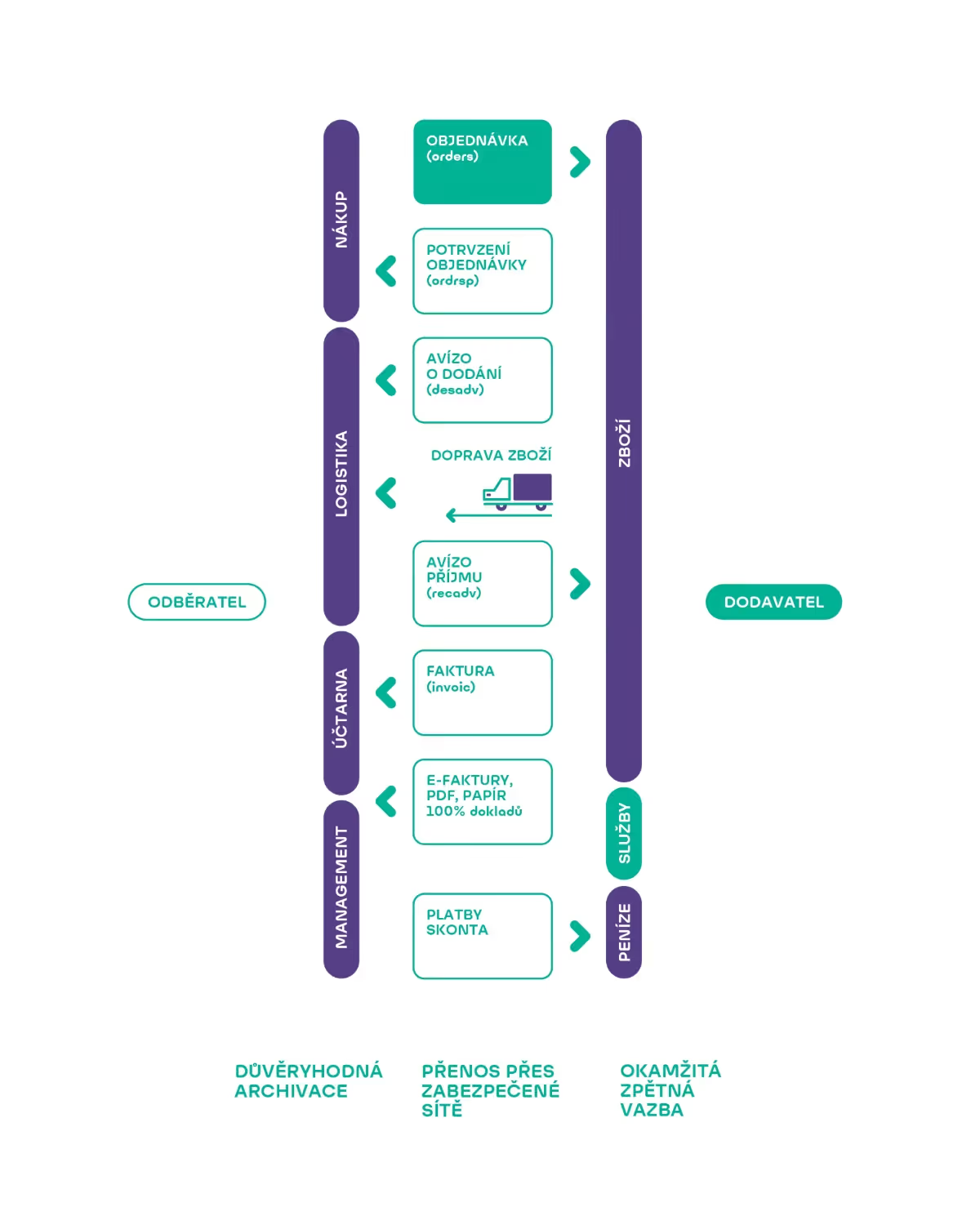
EDI communication
How does EDI communication work?
Purchase Order (ORDERS)
The buyer creates an order in their ERP system. ORiON EDI automatically converts it into a structured format and sends it to the supplier as an electronic order.
Order Response (ORDRSP)
The supplier accepts the order in their system or via webEDI and electronically confirms what will actually be delivered. This allows the buyer to see the quantities, delivery dates, and any changes before the goods are even shipped.
Delivery Note / Shipping Notice (DESADV)
Once the supplier prepares the goods for shipment, they send a delivery note or shipping notice to the buyer. The warehouse knows in advance which items will arrive, in what quantity, when, and under what logistics details, etc.
Goods Receipt (RECADV)
Upon receipt, the goods are compared against the purchase order and the delivery note. If any discrepancies in quantity, items, or delivery arise, they can be traced back to the specific business transaction.
Invoice (INVOIC)
The supplier sends an electronic invoice that corresponds to the purchase order and the goods received. The buyer's system can process it automatically and compare it with data from previous steps.
Payment (PAYMUL)
Once the invoice is verified, payment follows. In ORiON, this step can be followed by financing through Roger.
What role do EDI standards play?
Abbreviations such as ORDERS, ORDRSP, DESADV, RECADV, or INVOIC denote standardized types of EDI messages. Thanks to them, different ERP systems can exchange orders, delivery notes, or invoices, even if each company uses different internal settings.
In retail, logistics, and manufacturing, GS1 standards are often used, such as GS1 EANCOM. These help unify not only business documents but also the identification of products, partners, and logistics units using data such as GTIN/EAN, GLN, or SSCC.
Who is ORiON EDI suitable for?
For buyers with a supplier network
For retail, e-commerce, HoReCa, wholesale, manufacturing, pharmaceutical, or distribution companies that work with a large number of suppliers and need to unify the way they receive order confirmations, delivery notes, invoices, or other business data.
Typically addresses:
different ways of communicating with suppliers,
manual checks between the purchase order, delivery note, and invoice,
data discrepancies between purchasing, inventory, and finance,
onboarding additional suppliers according to standardized rules,
streamlining cash flow and the procure-to-pay process.
For suppliers connected to customers
For manufacturers, distributors, and wholesale suppliers who need to receive orders from customers and send confirmations, delivery notes, invoices, or inventory data in the format required by the customer.
Depending on the volume of documents and technical infrastructure, they can use a direct connection to their ERP or webEDI in a browser.
Typically addresses:
customer request for EDI communication,
higher volume of orders, delivery notes, and invoices,
communication with multiple customers from a single environment,
control over the status of sent and received documents,
streamlining cash flow and the order-to-cash process.
Direct ERP integration vs. webEDI
Direct ERP integration
For companies with their own ERP system.
Documents are transferred directly between ERP systems.
The company needs an ERP system connected to EDI.
webEDI
For smaller suppliers without an ERP or a system ready for EDI integration.
The supplier logs into the web portal via a browser.
All you need is an internet connection and access to webEDI.

Case studies

.avif)











30+ years of experience and thousands of companies
Why choose ORiON EDI from GRiT
Fast customer support
Secure and certified partner
Scalable solution for growth
Experienced team of experts
Seamless integration via API
24/7 cloud operation
Frequently Asked Questions
No. If you have an ERP system, ORiON EDI connects directly to it. If you do not have an ERP, you can use the webEDI web interface.
Typically orders, order confirmations, delivery notes, shipping notices, goods receipt notes, invoices, payment advices, credit notes, price lists, catalogs, inventory levels, logistics messages, and other documents based on the specific business relationship.
First, we will go through which documents you exchange with your suppliers/customers, what systems they use, and how the entire process should work. The GRiT team will help design the appropriate EDI communication setup, test the message exchange, and guide your suppliers/customers through the onboarding process.
Yes. Invoices can be both received and sent electronically via ORiON EDI. It is also one of the ways to prepare for mandatory e-invoicing and digital reporting under the European ViDA package.
Do you have another question?
Call us
+420 553 610 316Write to us
obchod.orion@grit.czThank you for filling out the form
We will be in touch soon.
ORiON EDI Product Terms and Conditions
You can download the ORiON EDI product terms and conditions document here.