A warehouse stocktake is used to determine the actual quantity of stock and to verify whether it matches the data in your accounting and inventory records. In a warehouse, the actual status is most commonly determined by counting, weighing, or measuring. However, the physical count itself is only one part of the entire process.
A well-prepared stocktake does not, therefore, begin only when warehouse staff pick up scanners or inventory sheets. It is preceded by warehouse preparation, checking pending movements, and establishing a clear procedure. Once the stock has been counted, it is followed by a comparison with records and an evaluation of any discrepancies.
In this guide, we will walk through the entire process step-by-step.
What is a warehouse stocktake
A stocktake determines the actual quantity of warehouse stock at a specific point in time. For physically present goods, this involves a physical stocktake, during which stock is counted, weighed, measured, or checked in another appropriate manner.
The result is compared with the status in the records. A stocktake therefore reveals not only the current quantity of stock but also any potential shortcomings in receiving, put-away, transfers, picking, or the recording of returns.
Stocktaking and inventory management are not the same
These terms are often used interchangeably in everyday language, but from the perspective of the Accounting Act (No. 563/1991 Coll.) they have different meanings.
A stocktake is the determination of the actual status of specific assets or liabilities. In a warehouse, this means, for example, the physical counting of stock.
Inventory management is a broader process. It includes carrying out one or more stocktakes, comparing the determined actual status with the accounting records, and settling any identified discrepancies.
Simply put: during a stocktake, you find out what you actually have. During inventory management, you simultaneously verify whether this status matches your accounting records and resolve any discrepancies.
When must a company carry out a stocktake?
An accounting entity must perform periodic inventory verification at the date on which it prepares its annual or extraordinary financial statements. For companies with a calendar financial year, this is usually the end of the year; for those with a fiscal year, the relevant date may differ.
Periodic stocktaking can be started up to four months before the balance sheet date and completed no later than two months after it. If a company determines stock levels at a different date, it must be able to document all additions and deductions between that date and the balance sheet date.
For inventory, under certain conditions, you can also use continuous inventory verification. In such cases, each type of inventory must be verified at least once per accounting period.
Types of stocktakes
In terms of accounting regulations, inventory verification is divided into periodic and continuous. In practice, however, you may also encounter extraordinary stocktakes or partial checks of selected items or sections of the warehouse.

Periodic and continuous stocktaking primarily refer to the timingof when the inventory verification is carried out. A partial stocktake, on the other hand, describes the scope of the check. These categories can therefore be combined. For example, a continuous stocktake can be partial, focusing only on fast-moving items in one warehouse zone.
Continuous or partial checks are particularly suitable for:
- expensive, high-value items,
- fast-moving inventory,
- goods with frequent stock movements,
- items where inventory discrepancies repeatedly occur,
- critical stock, the shortage of which could disrupt operations.
How to conduct a stocktake
The specific procedure depends on the size of the warehouse, the product range, the number of locations and the system being used. However, the basic steps are similar.
1. Define the scope and schedule
Determine:
- which warehouses, zones or items are to be counted,
- the exact time the stock levels are to be assessed,
- who is responsible for the stocktake,
- how the results will be recorded,
- whether the warehouse will be closed during the stocktake or checked in sections.
2. Prepare the warehouse and records
Before counting, check that all receipts, issues and transfers have been correctly recorded. Also pay attention to:
- open warehouse documents,
- goods awaiting receipt or dispatch,
- returns and claims,
- damaged or written-off goods,
- stock outside standard storage locations,
- unlabelled or incorrectly labelled items.
Both storage locations and items must be clearly identifiable. If the same item is located in multiple places, it must be clear whether it is being counted by location or in total.
3. Divide the warehouse and the work
Every worker must have a clearly defined area of the warehouse or specific stocktaking tasks assigned to them. If the company does not use a system and works manually, it is advisable to divide the warehouse into sectors and establish a sequence for checking, for example, rack by rack.
Mark already checked locations so that double counting or missing parts of the warehouse cannot occur. In a WMS, the system can assign specific locations to warehouse staff and record the progress of the stocktake in real time.
4. Determine the actual stock levels
The physical state of stock is determined primarily by counting, measuring, weighing, or other methods. However, the result must be recorded in such a way that the item being counted, its quantity, and its location can be clearly identified.
If possible, the warehouse worker should not see the expected recorded quantity during the first count. This reduces the risk of them unconsciously adjusting the result to match the value in the system.
5. Compare the stock with records
After the physical check, compare the quantities found with the warehouse and accounting records. The result may be:
- a match between the actual and recorded stock,
- a lower actual stock level,
- a higher actual stock level.
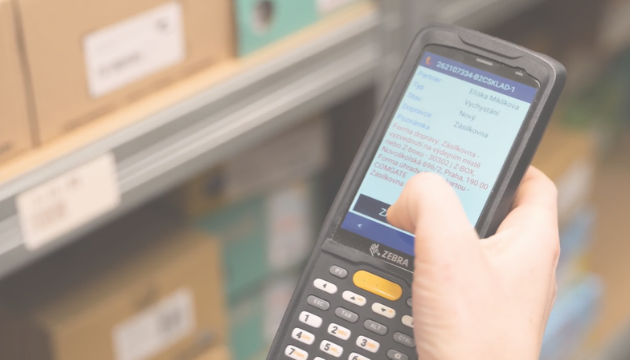
With paper-based stocktaking, results are usually transcribed into a system or spreadsheet. Scanners and WMS allow quantities to be entered directly during the check, reducing the risk of transcription errors.
What to do if the numbers do not match during a stocktake
A difference between the physical and recorded stock does not necessarily mean an actual shortage or surplus. First, verify whether:
- a counting error occurred,
- the item is located in a different area,
- there are open or incorrectly recorded receipts, issues, or transfers,
- a similar item, variant, or packaging was confused,
- the goods are among returns, claims, or damaged stock.
If the actual stock level is lower than the accounting records and the difference cannot be explained otherwise, it is a shortage. If the actual level is higher, it is a surplus. Inventory discrepancies are recorded in the period for which the stock level is being verified by the inventory count.
It is advisable to analyse recurring discrepancies. They may indicate a problem with receiving, storage, transfers, picking, or processing returns.
What inventory documents does a company need
Results are recorded in inventory lists. The documentation must make it possible to determine, in particular:
- what assets were inventoried,
- how the actual stock level was determined,
- who carried out the inventory,
- when it was started and completed,
- how any discrepancies were settled.
The accounting entity must be able to provide proof of the inventory count for a period of five years. It is advisable to set up a specific procedure according to the company's internal rules and consult with an accountant or tax specialist.
An example of how a well-managed warehouse shortens inventory time
A retailer of barefoot footwear Bosonožka has approximately 30,000 pairs of shoes in its warehouse and shop.After implementing LOKiA WMS, the stocktaking time was reduced from one month to two days.
It wasn't just about faster counting. The system provided a better overview of stock locations and movement between receipt, storage, and dispatch. As a result, stocktaking was based on more accurate records, and warehouse staff no longer had to spend time searching for items.
Stocktaking shows the state of your warehouse. Accuracy is built continuously
Stocktaking captures the state of inventory at a specific moment. If significant discrepancies regularly occur or if it takes an unreasonably long time, the problem may lie in the setup of the stocktaking process itself – for example, in work organisation, warehouse layout, counting methods, or how results are recorded.
LOKiA WMS helps manage warehouse operations sequentially and maintain an overview of stock and its location. Find out how it could work in your warehouse – book a free consultation and demo LOKiA WMS.
Ready to end the chaos in your company?
During a free consultation, we will review your current setup and recommend the next steps based on what your company actually needs.