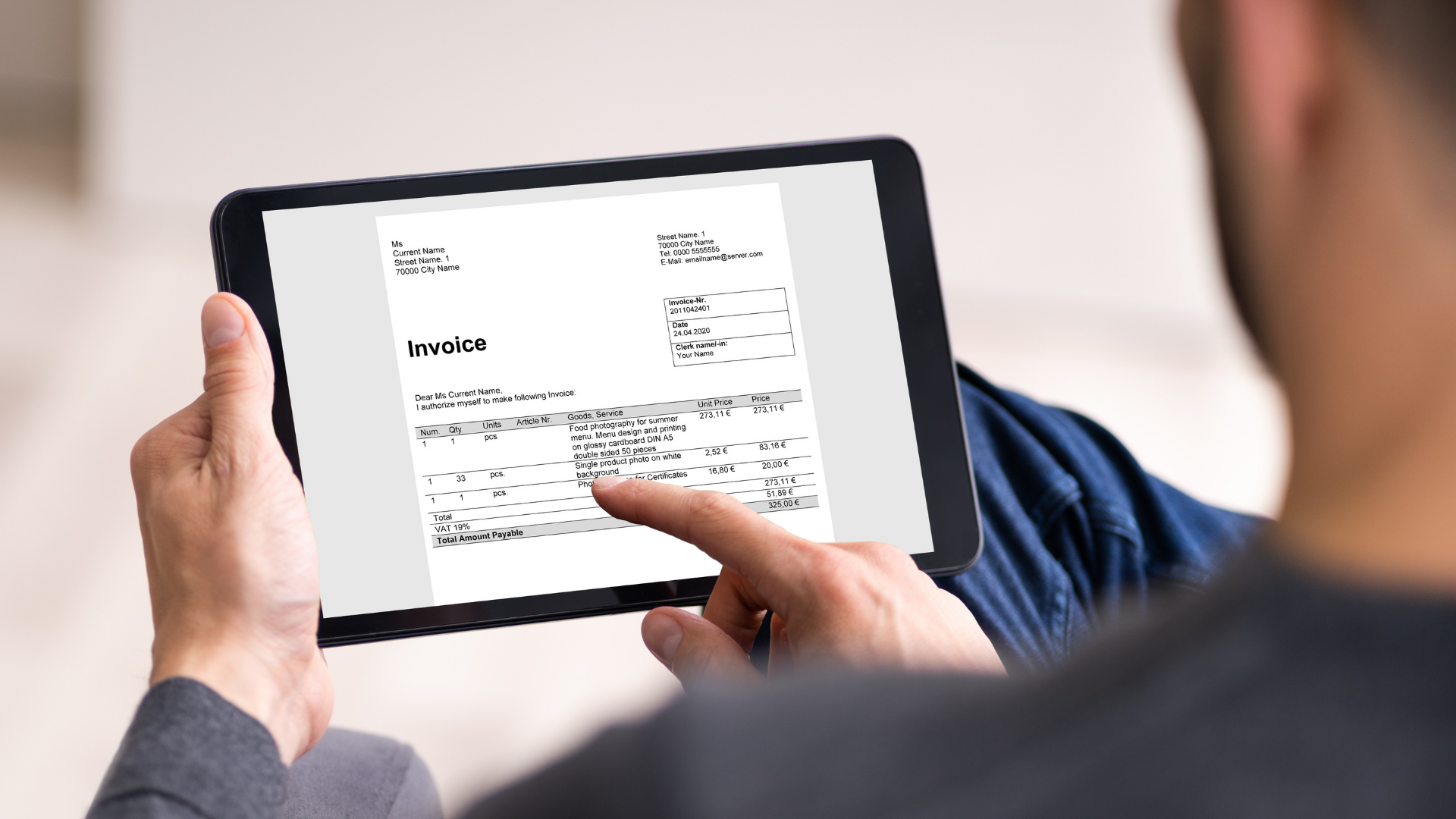
Mandatory e-invoicing in Slovakia starting January 1, 2027, will affect not only the format of invoices but also how they are issued, delivered, verified, and archived. We provide answers to eight questions that companies are dealing with most frequently during their preparations.
1. Who is affected by mandatory e-invoicing?
Electronic invoices will primarily be issued by Slovak VAT payers for legally defined domestic B2B and B2G transactions. Invoicing to end consumers does not fall under this regime.
However, other Slovak legal entities and taxable persons, including sole traders and some non-VAT payers, must also be prepared to receive e-invoices. They will gain access through their accounting system, ERP, or a digital mailbox application, which in Slovakia also includes GRiT.
2. Does the obligation apply to a Czech company registered for VAT in Slovakia?
A Czech company that is only registered for VAT in Slovakia under Section 5 but is not established there is not required to issue or receive e-invoices under this regime until June 30, 2030, according to current rules.
The situation is different for a Slovak subsidiary or branch. The status of the specific entity and the connection of the invoiced supply to Slovakia are the deciding factors. GRiT will help map affected companies and transactions before any system modifications.
3. Do proforma invoices fall under mandatory e-invoicing?
It depends on the type of document. A proforma invoice, which is merely a request for payment and not a tax document, does not need to be sent via the eFaktúra system. A tax document issued after receiving payment before the delivery of goods or services does fall under the mandatory regime. Therefore, the system must correctly distinguish between a payment request and an invoice for received payment.
4. Will it be possible to issue summary invoices?
Yes, but a summary invoice can only include supplies made within a single calendar month. Companies using long-term payment schedules or invoicing recurring supplies over longer periods must therefore review not only their system but also their current invoicing processes.
5. Is a company's current EDI solution sufficient?
EDI is a good foundation, but it does not in itself guarantee readiness for mandatory e-invoicing. The invoice must comply with the EN 16931 standard and a supported syntax, such as UBL or CII XML.
It is also necessary to verify validation, delivery via the Peppol network, and the processing of status messages. GRiT can build on your existing EDI or ERP, ensure data conversion, and connect your company to the delivery service without introducing additional separate processes.
6. What happens if an electronic invoice fails validation?
It depends on the type of issue:
- Validation error: The invoice does not have the correct structure or data and must be corrected and resubmitted.
- Delivery error: The document is correct but did not arrive, for example, due to incorrect recipient identification.
- Business discrepancy: The customer received the invoice but disagrees with the price, order, or fulfillment. This situation is usually resolved with a credit note and a new invoice.
The solution used should therefore show both the validation result and the actual delivery status.
7. Must a PDF also be archived along with the XML?
The mandatory electronic invoice is the XML document, which, according to Slovak regulations, must be archived for ten years from the end of the relevant calendar year.
It is not necessary to store a PDF together with the XML. However, the company must be able to display the invoice in a human-readable format throughout the entire period. It is therefore not enough to store the XML without a tool that can generate a readable output from it.
8. How much will implementing e-invoicing cost?
The price depends primarily on the number of invoices, the companies and systems involved, the complexity of the integration, and the required level of automation, archiving, and support.
GRiT uses a regressive model – meaning the more communication that passes through, the cheaper the communication per unit becomes. For ERP or EDI connections for companies with higher document volumes, the quote is based on specific processes. GRiT therefore first reviews your current solution and proposes a scope that meets legislative requirements without unnecessary parallel processes.
Do you have any other questions? GRiT will verify the readiness of your ERP or EDI, propose a suitable connection, and help you manage mandatory e-invoicing from analysis to go-live.
Ready to end the chaos in your company?
During a free consultation, we will review your current setup and recommend the next steps based on what your company actually needs.
.png)